


Welcome to Senate Majority Leader Kimberly A. Lightford's Legislative Website
Lightford leads law to allow clear designation of intellectual disabilities on a driver’s license
- Details
- Category: News
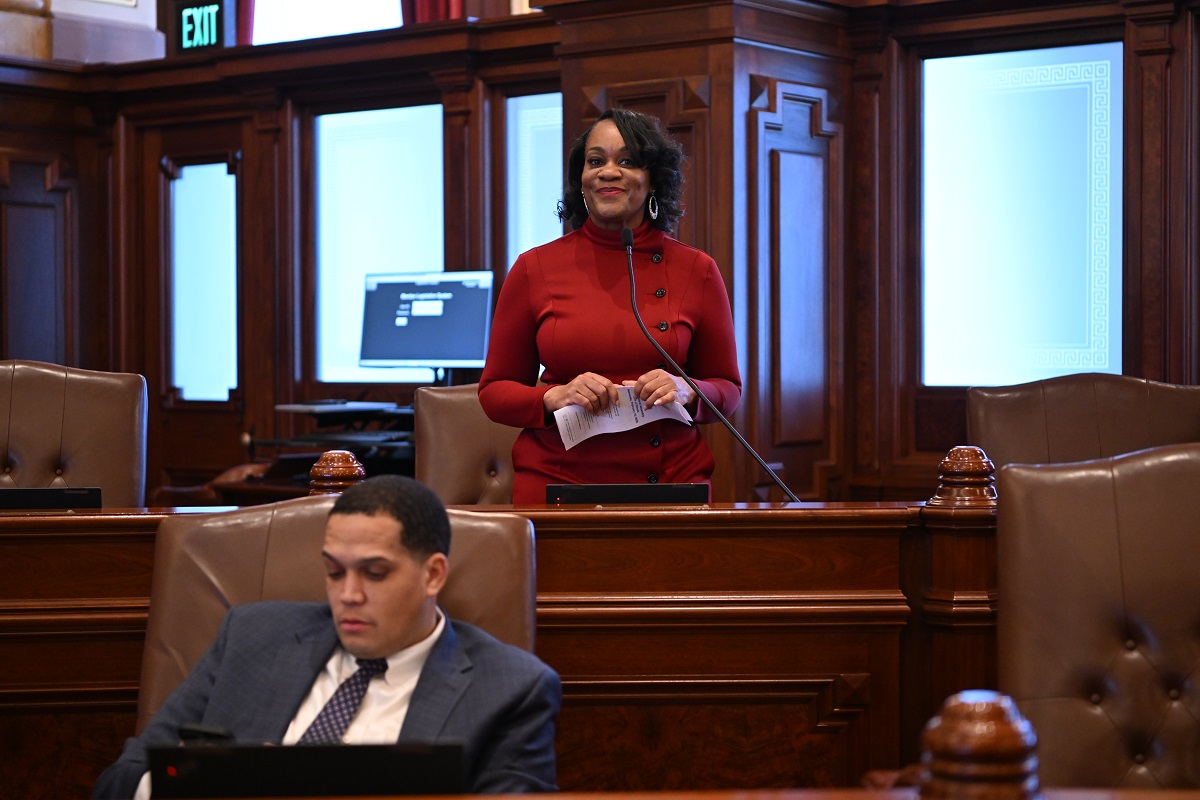
SPRINGFIELD – Senate Majority Leader Kimberly A. Lightford pushed for a protocol that will give drivers with autism and other intellectual disabilities the ability to clearly define their disability on their license – leading to safer traffic stops and interactions with law enforcement.
“A routine traffic stop is stressful for anyone – but for a driver with autism or another condition that affects how they process social cues and respond to commands, it can quickly escalate into a crisis,” said Lightford (D-Maywood). "Both the driver and officer deserve tools to prevent that escalation.”
Under Senate Bill 2524, if an individual presents documentation from a doctor stating they have an intellectual disability while applying for – or renewing – a driver’s license, they will be able to have a designation put on their ID card.
While people with autism may be able to manage their communication differences or behavioral challenges with supports at school, work or in their daily lives, they may experience unique challenges when interacting with police. Without a designation that someone may have an intellectual disability, law enforcement may interpret their behavior as being noncompliant with questioning or instructions. This has caused interactions between law enforcement and individuals with autism to escalate quickly, resulting in unnecessary use of force, trauma or death.
“When someone avoids eye contact or doesn't respond during a traffic stop, an officer may interpret that as defiance or impairment,” said Lightford. “But many people with autism, anxiety disorders or other conditions simply don't communicate the way officers are trained to expect. A simple designation on their license can prevent a routine stop from turning into a dangerous misunderstanding – protecting both the driver and the officer.”
Senate Bill 2524 was signed into law Friday.
Lightford leads law barring federal immigration detention centers near schools, homes and churches
- Details
- Category: News
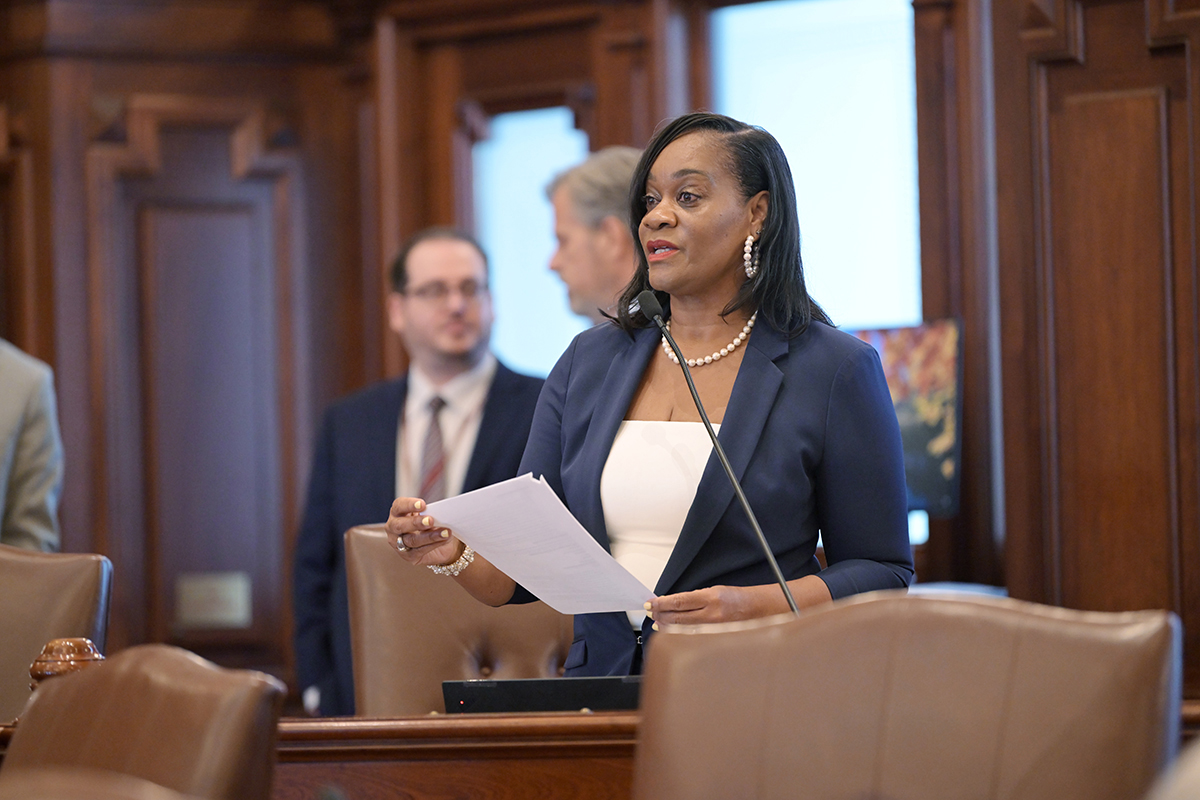
SPRINGFIELD – Senate Majority Leader Kimberly A. Lightford led a new law to restrict the construction, operation and placement of federal immigration detention facilities to locations no closer than 1,500 feet from designated protected sites, including educational institutions, child care facilities, places of worship and private residences.
“We need to keep places where children and families gather safe from federal interference,” said Lightford (D-Maywood). “This law is Illinois telling the federal administration that we won't allow immigration enforcement to disrupt our communities.”
House Bill 5024 comes in light of federal immigration activity and enforcement that began in late 2025 in Broadview – a community Lightford represents – where Illinois’ only immigration detention center is located. Residents and immigrants detained in the Broadview Processing Center recounted inhumane conditions, poor ventilation and cramped cells, as well as civil rights violations, such as a lack of access to lawyers, leading to a plethora of protests led by community members outside the facility.
Lightford’s law prohibits the federal government from operating a new immigration detention center within 1,500 feet of certain locations, including schools, day care centers, cemeteries, public parks, public housing, private residences and places of worship, ensuring the chaos and trauma residents across Broadview faced during Operation Midway Blitz does not occur across other Illinois communities.
“While the federal administration keeps disrupting our neighborhoods, Illinois lawmakers are stepping up to protect residents,” Lightford said. "Communities are supposed to feel safe and supportive – but that's hard to promise when detention centers can be placed anywhere in our neighborhoods.”
House Bill 5024 was signed into law Friday.
Lightford takes on women’s health care gaps
- Details
- Category: News
SPRINGFIELD – Senate Majority Leader Kimberly A. Lightford is taking on women's health care gaps — having led newly signed legislation to expand menopause treatment access and crack down on workplace discrimination against those dealing with related conditions.
“Illinois should be a leader in caring for women going through perimenopause and menopause — and that means removing the obstacles that have held too many back from getting help,” said Lightford (D-Maywood). “Requiring private insurance to cover these evaluations and treatments will make care more affordable and help prevent serious long-term health issues.”
Under previous law, Illinois required insurance coverage for FDA-approved menopause treatment to ensure a person’s income does not obstruct them from receiving sufficient care. Lightford’s new law will broaden coverage requirements, mandating private health plans in the state cover the medically necessary evaluation and treatment of menopause and perimenopause conditions, including hormone conditions and medications.
Additionally, the law aims to safeguard workplace protections by prohibiting employers from discriminating against an employee experiencing menopause-related conditions, such as hot flashes, metabolic changes or forgetfulness – a common symptom of menopause often referred to as “brain fog.” To ensure employees who experience conditions have equitable civil rights in their work environment, reasonable accommodations, including flexible scheduling, temperature control workspaces and remote work options, will be required.
In 2023, the Mayo Clinic published a study revealing menopause-related symptoms do not only adversely affect the quality of life women have at home, but they also cost women an estimated $1.8 billion in lost work time per year – $26.6 billion annually with medical expenses factored in. Lightford’s law will ensure workplaces adopt supportive policies that promote both employee safety and retention with the goal of curbing discrimination and enhancing productivity.
“Perimenopause and menopause often hit women right in the middle of their careers,” Lightford said. “Without flexible working conditions, that can hurt productivity and cause companies to lose talented employees they didn't have to lose. This bill is about taking real action to support some of the most important people in our workforce and our communities.”
House Bill 5284 was signed into law Friday.
Lightford champions law to protect seniors and adults with disabilities from financial exploitation
- Details
- Category: News
SPRINGFIELD – Senate Majority Leader Kimberly A. Lightford led a new law to protect seniors and adults with disabilities from financial exploitation by empowering banks, credit unions and investment firms to intervene when suspicious activity is detected on a vulnerable adult's account.
“Financial exploitation is one of the most devastating forms of elder abuse, and it often goes undetected until serious damage has already been done,” said Lightford (D-Maywood). “House Bill 4911 gives banks, credit unions and financial professionals the authority and the protection they need to step in when something doesn't look right – and that could make all the difference for a vulnerable adult and their family.”
Under the law, financial institutions will be empowered to disclose suspicions of financial exploitation to trusted contacts, co-owners, beneficiaries, or known family members of the account holder, and will be able to place a temporary hold on transactions when exploitation is reasonably suspected. Institutions acting in good faith will be shielded from administrative and civil liability for such holds.
The law will also expand the list of mandated reporters under the Adult Protective Services Act to include investment advisers, securities dealers and financial institution employees with direct access to eligible adult clients' accounts – and will allow the state to share exploitation records with licensing boards, investigatory units, and prosecutorial bodies when the alleged abuser falls under their jurisdiction.
“No one should have to worry that the people or institutions entrusted with their finances are working against them,” Lightford said. “This law creates a stronger safety net for some of our most vulnerable residents and ensures that those positioned to spot exploitation have both the tools and the responsibility to act.”
House Bill 4911 was signed into law Thursday.
More Articles …
Page 1 of 168




Follow Sen. Lightford


eNewsletter Signup
Bio
Senate Majority Leader
Kimberly A. Lightford
Born May 10, 1968, in Chicago; B.A., public communications & human relations, Western Illinois University; Master's in public administration, University of Illinois at Springfield. Village of Maywood Trustee 1997-2003; State Government Employee - IL Secretary of State, IL Department of Corrections, IL Central Management Services. Resides in Maywood with her family.
Contact Us
District Office:
High Point Plaza
4415 W. Harrison St.
Suite 550
Hillside, IL 60162
(708) 632-4500 PHONE
(708) 632-4515 FAX
Springfield Office:
325 E Capitol Building
Springfield, IL 62706
(217) 782-8505 PHONE